
The world has broken the 1.5°C promise it made to its most vulnerable countries. The breach has not yet been recorded on a sustained basis, but the United Nations Environment Programme (UNEP) says it is widely assessed as unavoidable and likely within the next few years. Even its most optimistic scenario puts peak warming at 1.8°C. For small states that fought to secure recognition of 1.5°C in the Paris Agreement, this confirms the failure to deliver a safeguard on which their security, economies and, in some cases, survival depend.
All Stories
Tallahassee-- Early’s Kitchen is the Tallahassee spot for breakfast. Located on the Southside, the Black-owned restaurant draws patrons from miles around the capital city. The Jolly/Graham team stopped by at the invitation of Leon County Commissioner Bill Proctor and was greeted by a packed house of folks looking for answers.
Women are equal to men and should be treated as such. And yes, many women have been clamoring for equality of the sexes after centuries of being perceived as less that men and treated as second class, or even no class at all.
WASHINGTON, DC - In 1796, as George Washington prepared to leave the presidency of the United States, he issued a warning that remains relevant, particularly for Caribbean small states.
WASHINGTON, DC – For generations, Kenscoff was where people from Port-au-Prince went to breathe. Its cool hills offered relief, and its farmers supplied the capital’s markets. Gang attacks reached the commune in January 2025, but it remained an important barrier between gang-controlled territory and Pétion-Ville.
Haiti’s plight must not be forgotten because it is no longer a regular feature of international headlines. The suffering has not diminished. Between January and early June 2026, at least 2,310 people were killed, 1,106 were injured, and 99 were kidnapped, according to the United Nations Office on Drugs and Crime (UNODC). It also reported that 699 women and girls were victims of sexual violence, and that almost 1.47 million people had been displaced within Haiti by May.
BRIDGETOWN, Barbados – On June 12, 2026 the Central Bank switched off the payment system this country had run on for a generation, and switched on another. That was a deliberate choice, and it is worth explaining why we made it.
Florida’s primary election poses interesting questions for Black voters and representation. Election Night brought about the opportunity to help elect the state’s first Black governor, first Black US Senator and the choice of a white Jewish woman to represent a congressional district historically held by a Black member of Congress.
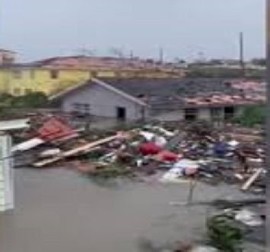
Each year, when hurricane season begins in the Atlantic, governments across the Caribbean activate emergency plans, test communication systems, preposition relief supplies, and mobilize communities. These measures reflect decades of hard-won experience managing hurricanes, some of the most destructive in the world.
PORT AU PRINCE, Haiti – How do you tackle corruption in a country grappling with insecurity, weak institutions and widespread impunity? In Haiti, the government and the United Nations are betting on the country’s youth.
I have been an advocate of the Caribbean Court of Justice from its conception. In 2015, on the Court’s tenth anniversary, I described its creation as arguably the most significant institutional achievement of the English-speaking Caribbean since the Treaty of Chaguaramas. I have not changed that view.
CASTRIES, St. Lucia – If you have raised or taught a teenager in the Caribbean over the past fifty years, you know the SBA. You have lived it: the kitchen table covered in questionnaires, the child who suddenly needs to interview a fisherman or measure the school yard, the late-night printing, the sigh of relief when the folder is finally handed in. The School-Based Assessment has been part of our family life, our staffrooms, and our children’s certificates for nearly half a century.
Few issues test the sovereignty of small states more severely than requests made by powerful friends. How should a country respond when cooperation is expected, but the proposed terms exceed its legal, financial and institutional capacity? That question lies at the centre of the discussions between the United States and several Caribbean governments over Third-Country Nationals (TCNs).