


BRIDGETOWN, Barbados - St. Lucia’s Prime Minister Phillip J Pierre says the Third Regional Conference on Reparations should not be viewed as a gathering intent on reopening old wounds on slavery “because these wounds were never properly addressed”.
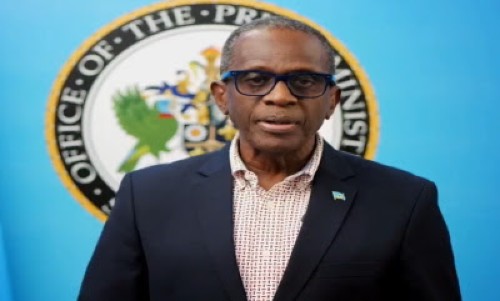 St. Lucia’s Prime Minister and CARICOM Chairman, Phillip J Pierre, addressing the opening of the Third Regional Conference on Reparations (CMC Photo)Pierre, who is also the chairman of the Caribbean Community (CARICOM) grouping, in a virtual address to the opening ceremony here on Thursday night, said that he welcomed the gathering of regional and international delegates under the theme of reparative justice “as the coming enlightenment.
“We are gathered because the trafficking and enslavement of African racialised chattel slavery and colonial domination did not end with emancipation. The consequences remain visible in the poverty, inequality, exclusion and vulnerability that continue to affect our people and our nations.
“Emancipation was a historic victory, but emancipation without justice was incomplete. Freedom without equality was unfinished, and independence without the full repair of the damage inflicted upon our people cannot be the final destination.
“This is why reparations are not an appeal for charity. They are a call for justice. They are a request for truth. They are a demand that history be confronted honestly and that responsibility be matched by action.”
Pierre said that the revised CARICOM Ten Point plan for reparatory justice provides a “clear and principled framework.” calling upon the region to move beyond statements of regret and towards meaningful transformation for education, health, cultural renewal, economic opportunity, debt justice, climate justice and the dismantling of systems that contribute to disadvantage our people.
He said the recognition by the United Nations of the trafficking and enslavement of Africans as the greatest crime against humanity is an important step, but recognition by itself is not repair.
Pierre said acknowledgement must lead to accountability and accountability must lead to action, and action must improve the lives of Caribbean people.
“Our task, therefore, is urgent. We must speak with unity. We must negotiate with courage. We must build stronger partnerships among CARICOM, Africa, the African Union, civil society and the global African diaspora. Let this conference be more than a moment of reflection. Let it be a moment of resolve. We know where we have come from. We know what was taken from us, and we know what justice requires.
“The Caribbean will not be silent. The Caribbean will not be divided, and the Caribbean will not accept delay as a substitute for justice. Let us move forward with courage, dignity and purpose, determined to ensure that justice delayed does not become justice denied,” Pierre told the delegates.
The three-day conference is being hosted by the CARICOM Reparations Commission (CRC), the Barbados government and the CARICOM Secretariat.
The organisers said that the conference will strengthen collaboration among Caricom, the African Union, civil society, and the global African diaspora. It aims to invigorate political, diplomatic, and community participation in the regional and international movement for reparatory justice, ensuring that the momentum for change is sustained and broadened.
The conference will also bring together CARICOM ministers responsible for reparatory justice, National Reparations Commissions and Committees, Associate Members and the United Nations. Global reparations activists from the United States, Canada, United Kingdom, European Union, and Latin America will also participate, alongside scholars, civil-society leaders, cultural figures, and youth delegates.
The first two Caricom Regional Conference on Reparations were held in St Vincent and the Grenadines and Antigua and Barbados in 2013 and 2014 respectively.

