


BASSETERRE, St. Kitts – St. Kitts and Nevis Prime Minister Dr. Terrance Drew says strict screening and security measures are being applied as the twin island Federation moves towards entering into an agreement with the United States on the relocation of illegal migrants to the region.
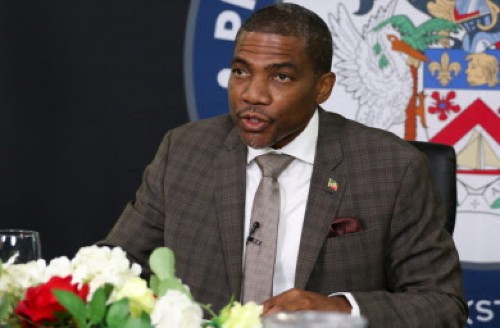 Prime Minister Dr. Terrence DrewPrime Minister Drew, speaking on the latest edition of the Prime Minister’s Round Table said that the agreement with Washington applies to nationals of Caribbean Community (CARICOM) member states and provides St. Kitts and Nevis with the authority to reject any proposed individual who does not satisfy the country’s security requirements.
Prime Minister Drew told reporters that the individuals transferred to the twin island Federation would be subjected to background, immigration, medical and security assessments before their arrival.
“So these are not criminals. We have no reason to lock them up or anything like that,” he added.
In May, the government had confirmed that three CARICOM nationals had been transferred from the United States, not because of criminal convictions, but in relation to immigration violations in the United States.
The government said then that relevant national security, immigration and law enforcement agencies were engaged in the process, and the United States provided available biographical, medical and criminal background information before the transfers.
The bilateral arrangement preserves the sovereignty of St. Kitts and Nevis, as the Federation retains the sole discretion to accept or reject any person proposed for transfer. The memorandum of understanding also explicitly excludes individuals convicted of violent or sexual offenses.
Prime Minister Drew said that should information subsequently emerge showing that an individual falls outside the terms of the agreement, the government would take the necessary action.
“There will be measures taken to ensure that St. Kitts and Nevis is not exposed to any criminals,” Prime Minister Drew said, adding that the International Organization for Migration (IOM) was also involved in the process.
He said that the IOM has provided independent oversight and helped to ensure that the transfers were conducted in accordance with international law, humanitarian standards and the rights of the individuals concerned.
Prime Minister Drew said that the associated expenses are being assessed on a case-by-case basis, taking into account housing, food, clothing, healthcare and other essential needs. These expenses are not being borne by the government.
“I can say broadly that one, it didn’t cost St. Kitts and Nevis one cent, and two, we made sure that the basics were covered for these people,” said Prime Minister, maintaining that the government is balancing its international and regional responsibilities with its primary obligation to protect the security and national interests of Saint Kitts and Nevis.
He has sought to re-assure the public that his administration will continue to act transparently and apply strict immigration, security and law enforcement procedures to every person considered under the arrangement.
At the last summit in St. Lucia last week, CARICOM leaders discussed the arrangements of Third Country Nationals (TCNs) to individual member states by Washington.
“Heads of Government considered common concerns across the region regarding the capacity of small countries to manage the transit of TCNs. The regional leaders stressed, however, that every effort would be made to ensure that TCN arrangements do not disrupt the security of countries in the Region or divert resources and services from the citizens of respective countries,” according to the communique issued at the end of the meeting.
It said that the leaders had highlighted the fact that the proposed MOUs were intended to provide for the transit of individuals without criminal antecedents to their home countries rather than settlement in member states and emphasized the need for citizens of the region to understand the distinction.
“They further agreed that every effort should be made to engage CARICOM citizens on these issues. They also affirmed their commitment to the principles of safe, orderly and regular migration, and to the dignity of migrants.”

