


Stakeholders in Guyana Divided on Social Media Restrictions For Children
GEORGETOWN, Guyana – Communication professionals, influencers and content creators in Guyana have expressed differing views on whether children should face age-based restrictions on access to social media, as the government continues consultations on developing a national approach to online safety.
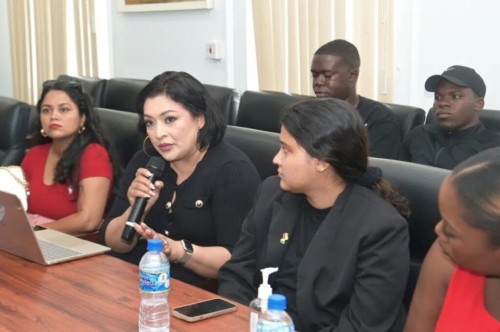 creator, Susan Abraheem better known as Saks Guyana’ sharing her concerns and suggestions. (Photo credit: DPI)The issue was raised during separate consultations involving public relations officers, communications specialists, influencers and digital content creators, as authorities seek views on how best to address the impact of social media on children.
The consultations form part of efforts to develop a framework to address concerns, including cyberbullying, grooming, harmful content, harassment and excessive screen use, while ensuring that children can continue to benefit from opportunities provided by digital platforms.
Participants discussed possible age limits, parental responsibility, online safety measures and the need to balance protection from harmful content with access to information and opportunities.
Deputy Director of the Department of Public Information (DPI), Cassandra Persaud, said she supported stronger restrictions for younger users.
“I think social media should be off limits for children under 16. I’m of that view because of the dangers that exist,” she said.
Persaud argued that parents alone could not be expected to monitor children’s online activities effectively, particularly in households where parents face work and other responsibilities.
However, other participants warned against imposing blanket restrictions, noting that social media platforms can provide access to information, scholarships, competitions and other opportunities.
Public Relations and Communications Manager at Digicel Guyana Inc., Gabriella Chapman, said social media had helped expose her to opportunities and information she might not otherwise have accessed.
“Social media is what would have exposed me to a lot of realities, a lot of opportunities,” Chapman said.
Multimedia and logistics professional Kiana Wilburg also cautioned that strict bans could encourage children to circumvent restrictions and instead advocated greater education on responsible use of digital platforms.
“My fear is that the more you impose something like that, the more children will gravitate towards it,” Wilburg said.
Communications professional Fareeza Haniff suggested that Guyana examine approaches being considered internationally, including systems that apply different levels of access and safeguards according to age groups.
“I would recommend that Guyana look at the models adopted or implemented or being considered for implementation in the UK, EU and India,” Haniff said.
During the consultation with influencers and content creators, participants stressed the importance of collaboration among parents, government and digital platforms to improve online safety for children.
Content creator and parent Susan Abraheem, popularly known as “Saks Guyana”, said education and guidance at home should form part of any approach.
“Things start from home. For me, the steps that I took, when my daughters were about eight years old, I started sitting down and literally speaking to them about social media, about grooming, about a whole different line of things,” she said.
Abraheem said children between the ages of 13 and 15 could potentially be allowed supervised access to social media platforms with parental consent.
“I feel like, as parents, we should be able to teach our children how to use social media, let them have conversations with you, because when you have open conversations instead of judging them constantly, they tend to sneak around,” she said.
Participants also raised concerns about younger children’s exposure to digital content and called for further research into the impact of online platforms on children’s emotional, psychological and social development.
“We need to have proposals that consider those effects and solutions as well, that will bring forward tangible and impactful means where our children can develop not just in a safe environment but very wholesome,” one participant said.
The creation of local, age-appropriate content was also identified as a priority.
“If we can come together and have IT officials work with companies and create more content for the tender kids that would focus mainly on Guyana, our background, where our people originated from, make it fun and catchy,” participant Mathew Gual said.
Participants also called for stronger parental controls and greater digital literacy among parents and caregivers.
Norman Brown said setting limits on screen time could help children develop healthier habits.
“I limit him to one hour. Afterwards, he has to go and do something else, maybe play a game, not on the phone, with his cousins or whatever the case may be,” Brown said.
Closing the consultation, Minister within the Office of the Prime Minister with responsibility for Public Affairs, Kwame McCoy, stressed that no decision had been taken on a minimum age for social media use and said recommendations gathered from stakeholders would help inform the government’s approach to strengthening child online protection measures.

