


KINGSTON, Jamaica — Medical specialists are urging Jamaicans to learn their sickle cell status before starting families, with nearly 20,000 people estimated to be living with the inherited blood disorder and about one in 10 carrying the sickle cell trait.
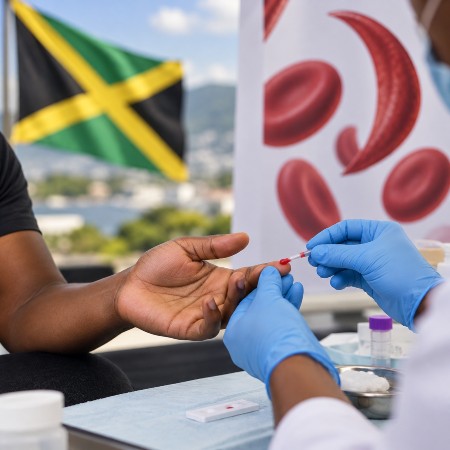 Professor Jennifer Knight-Madden, co-chair of the Ministry of Health and Wellness-led National Sickle Cell Technical Working Group, said greater awareness is needed to help families understand inheritance risks and address misconceptions about the condition.
“Sickle cell disease is a blood disorder. An inherited blood disorder. So you cannot catch it,” she explained.
The condition occurs when a child inherits two abnormal haemoglobin genes, one from each parent, with at least one producing sickle haemoglobin. Red blood cells can become crescent-shaped and obstruct small blood vessels, causing severe pain and other complications.
Knight-Madden said people living with the disease may appear calm when seeking emergency treatment despite experiencing excruciating pain, which she likened to “chickungunya (ChickV) on steroids”.
She also urged people to avoid labels that define individuals by their condition.
“The first thing is that we call them people living with sickle cell disease because we don’t define them by their illness,” she said.
People with sickle cell trait generally lead healthy lives but can pass the gene to their children. When both parents carry the sickle cell trait, each pregnancy has a 25 per cent chance of producing a child with sickle cell disease. Other combinations of abnormal haemoglobin genes can also result in the disorder.
Knight-Madden encouraged young people to know both their own status and that of a potential partner.
Dr Lesley King, head of clinical services at the Caribbean Institute for Health Research at The University of the West Indies, told The Sunday Gleaner that symptoms commonly begin between four and six months of age.
An early complication, known as dactylitis, causes painful swelling of the hands and feet and can be mistaken for an insect bite, she said.
King warned that young children with sickle cell disease are particularly vulnerable to serious bacterial infections, making early diagnosis and preventive care essential.
Figures presented at a recent biennial conference indicated that 99.9 per cent of babies born in Jamaica are screened for the condition.
Jamaica’s screening programme grew out of pioneering research by Professor Graham Serjeant and his wife, medical technologist Beryl Serjeant.
Their work included testing 100,000 consecutive births at the Victoria Jubilee Hospital, helping establish the prevalence of the disease and guide treatment.
After screening stopped following the initial cohort study, advocacy helped secure its resumption at three hospitals in 1995. The programme subsequently expanded, with further research and lobbying contributing to nationwide newborn screening in 2015.

