


Bermuda’s Land Snail Recovery Draws International Attention to Conservation Success
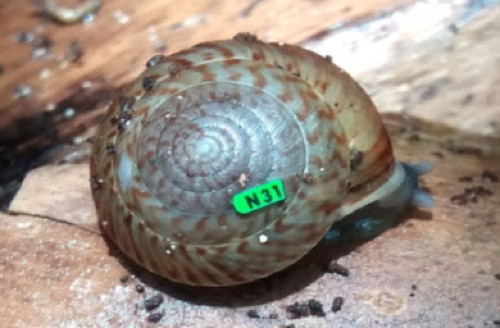
HAMILTON, Bermuda – The Bermuda land snail, a species once feared extinct, is now being recognised as one of the island’s notable conservation success stories.
 “This is a proud moment for Bermuda. It shows that conservation work, when taken seriously and supported properly, can produce meaningful results,” said Public Works and Environment Minister, Jaché Adams.
“The recovery of this species is not only important from a scientific perspective, but also as a reminder that Bermuda has a unique natural heritage worth protecting,” he added.
The Department of Environment and Natural Resources (DENR) says it is welcoming international media attention to the “remarkable recovery” of the snail saying that recent overseas coverage has highlighted the comeback of the greater Bermuda land snail, Poecilozonites bermudensis, and drawing wider attention to the years of careful work that helped return the tiny endemic species to parts of its native range.
Found nowhere else in the world, the greater Bermuda land snail was once believed to have disappeared entirely and the DENR said that its rediscovery in Bermuda more than a decade ago opened the door to an ambitious recovery effort involving local conservation leadership, overseas scientific and husbandry support, captive breeding, reintroduction, and long-term monitoring.
It said that the recovery of the species is a clear and encouraging example of what can be achieved through determined conservation action, investment in native habitats, and sustained collaboration across borders and disciplines.
“This is genuinely positive news for Bermuda and for conservation. A species that was thought to be gone has been given a real chance of survival, and that did not happen by accident. It reflects years of patient work, good science, and a willingness to act before it was too late,” said Dr Mark Outerbridge, Senior Biodiversity Officer with the DENR.
“One of the most important parts of this story is that Bermuda had suitable protected habitat available for reintroduction, particularly on Nonsuch Island. That mattered. It meant there was a place where these snails could be returned to a safer, more suitable environment within their natural range and monitored over time,” he added.
DENR noted that the recovery effort brought together a range of partners, beginning with the species’ rediscovery in Bermuda, followed by captive care and breeding support in the United Kingdom, reintroduction work in Bermuda, and continuing scientific study to better understand where the species can survive and expand.
“This has been a strong example of conservation collaboration at its best. It began with a small surviving population here in Bermuda, then moved into specialist captive breeding overseas, and came back to Bermuda through carefully planned releases and monitoring,” said Dr Outerbridge.
The DENR said the recovery findings will also be reflected in an upcoming scientific publication, which documents the outcomes of reintroduction efforts and the lessons learned from monitoring the species across multiple sites in Bermuda.

