


GEORGETOWN, Guyana - President Irfaan Ali has told senior representatives from the banking and private sectors, entrepreneurs and community stakeholders that the soon to be established Guyana Development Bank (GDB) will serve as a transformative instrument that will expand access to finance while creating a broader ecosystem of mentorship, technical support and market opportunities.
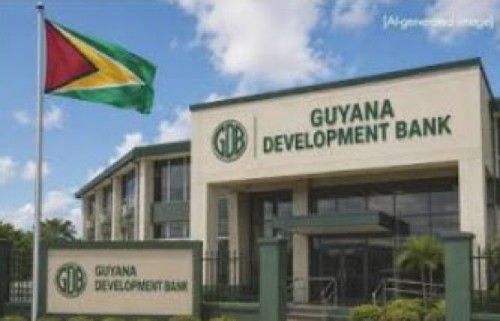 The GDB is schedule to be officially open on October 5, and the government said the financial institution will have an initial capital injection of US$100 million, offering eligible borrowers financing of up to three million Guyana dollars, including zero interest and zero collateral loans.
President Ali said the institution will be deliberately structured to reach communities at the grassroots level, including hinterland and riverine communities, while targeting opportunities across agriculture, agro processing, tourism, manufacturing, services and technology.
“This is not a grant. This is your opportunity to earn. This is your opportunity to pay back. This is an opportunity to build your credit,” he told the stakeholders, adding that the bank’s role will extend beyond simply approving loans.
He said prospective borrowers will be assisted in refining their ideas, developing proposals and connecting their enterprises to existing government programmes, technical services and established markets.
Ali said this approach could allow individuals with modest operations to work collectively, creating larger and more efficient enterprises, pointing to examples in agriculture where groups of single mothers, farmers or young entrepreneurs could combine their efforts, access modern infrastructure and benefit from technical expertise, thereby improving productivity while addressing challenges at the community level.
“The whole intention is to use this opportunity to build something that is long lasting, strategic, strong, and of course, is not in competition at all with the commercial banks. This is really to unlock more financing.”
Ali said there were opportunities for locally produced foods, agricultural products and other Guyanese brands to enter larger domestic, regional and international markets, adding that the development of local brands and their expansion throughout the Caribbean must become part of the country’s entrepreneurial landscape.
He spoke of possibilities such as organised dragon fruit production, modern poultry facilities, eco lodges and packaged Guyanese food products, stressing that the emphasis should be on moving from fragmented individual production towards coordinated and scalable enterprises.
“It’s economic transformation. Financial empowerment. It’s about widening the depth of income, adding more disposable income in your pocket, helping in the diversification of our economy and building the grassroots aspect of the economy stronger,” Ali said, adding that the GDB will also provide a mechanism through which entrepreneurs can build credit histories and eventually graduate to larger financing through the commercial banking system.
Under the planned co financing arrangement, successful borrowers can potentially access additional financing of up to seven million Guyana dollars from traditional lending institutions at favourable interest rates. The GDB will also facilitate the formation of consortia, allowing beneficiaries to achieve greater scale, specialisation and risk sharing.
President Ali said the initiative will require the collective involvement of commercial banks, established businesses, mentors, technical professionals and community leaders.
Meanwhile, the government has said that foreign currency flowing through the country’s financial system increased sharply during the first half of 2026, but growing consumer spending, business expansion and other foreign-currency requirements continue to drive strong demand for United States dollar.
Ali said total foreign currency availability reached US$3.115 billion between January and June 2026, representing a 27.7 per cent increase over the US$2.440 billion recorded during the corresponding period in 2025.
Commercial banks purchased US$2.279 billion in foreign currency during the first half of 2026, compared with US$1.798 billion during the same period last year. Foreign currency injections also increased from US$642 million between January and June 2025 to US$836 million during the corresponding period this year.
Ali said despite the increase in availability, commercial banks have estimated outstanding foreign-currency demand at just over US$200 million and that changing consumer behaviour is one factor contributing to the increased demand.
Credit-card settlements, for example, climbed from approximately US$140 million in 2024 to US$430 million in 2025, an increase of more than 200 per cent. So far this year, credit-card settlements have reached approximately US$356 million.
“That is a type of growth and difference we’re talking about. That’s just one indicator of changing patterns,” he said, noting that demand is expected to remain elevated during the final months of the year.
President Ali said projected foreign-currency demand from September 10 to the end of December stands at approximately US$1.575 billion, comprising projected demand of US$354 million between September 10 and 30, US$385 million in October, US$400 million in November and US$436 million in December.
Against this backdrop, the government and commercial banks are examining what is driving demand and how foreign currency is being utilised across the economy and President Ali said particular attention is being paid to large corporate users of foreign currency, including regional and multinational companies.
One area under examination is the repatriation of profits. He explained that companies may require US dollars to send profits overseas while also seeking additional foreign currency to finance plant, machinery and other capital expansion locally.
“So, you take your profit out with US dollars, and then there’s a second demand on US dollars for a capital expenditure,” he said, adding that the government is also examining whether there is any misdirection of foreign currency or whether US dollars sourced in Guyana are being used to finance other operations.
But he stopped short of concluding that such practices are occurring, noting that the analysis is still underway and that commercial banks have been asked to provide further information on the structure of foreign-currency demand.
“They have said to me that there were unmet demand from earlier this year. So there is some carry-forward of demand every month because they are not meeting their monthly demand,” he added.

