


WASHINGTON, DC – The International Monetary Fund (IMF) Wednesday said that Grenada’s economy continues to navigate elevated global uncertainties effectively in the aftermath of Hurricane Beryl, the category four storm that hit the island on July 1, 2024.
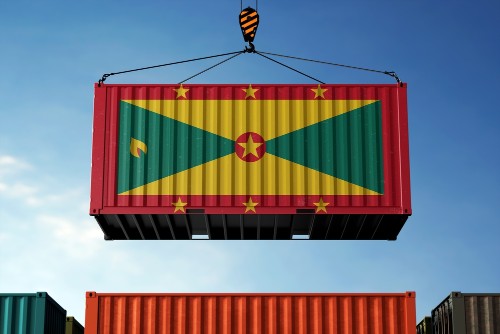 “Economic activity remains robust, with strong investment and construction more than offsetting a moderation in tourism inflows,” the IMF executive board said following the 2025 Article IV consultation with Grenada, endorsing the earlier staff appraisal.
The IMF said Grenada’s economy has proven resilient in the aftermath of Hurricane Beryl, despite elevated global uncertainties. Growth in 2025 is estimated to have accelerated to 4.4 per cent, driven by strong investment and construction activity. Inflation has continued to moderate, reflecting easing global food and fuel prices. The fiscal position remains comfortable notwithstanding a temporary suspension of fiscal rules and an estimated 2025 primary deficit of 3.2 per cent of gross domestic product (GDP).
According to the Washington-based financial institution, major public infrastructure projects will sustain buoyant construction over the medium-term, extending the gradual moderation in overall growth toward its long-term potential.
The executive board said current low inflation is expected to gradually normalise by 2028. “Grenada’s external position in 2024 is assessed as weaker than the level implied by medium-term fundamentals and desirable policies and the large current account deficit will remain elevated over the medium-term until construction import pressures subside. “Notwithstanding near-term fiscal deficit deficits amid reconstruction and other priority spending, the underlying fiscal position remains sound.”
The executive board said the downside risks to the outlook persist amid heightened global economic and geopolitical uncertainties.
It said these stem from Grenada’s high vulnerability to natural disasters and reliance on tourism and imports, even as moderate shocks to key tourism source countries or global commodity and shipping prices are assessed to have only modest impact.
Risks could be amplified by disruptions to the Citizenship by Investment Programme (CBI) and Foreign Direct Investment (FDI) inflows, materialisation of risks in the domestic non-bank financial system or delays, or cost overruns in large investment projects. Faster-than-expected expansion in tourism capacity represents a key upside risk.
The IMF said a robust disaster resilience framework and government deposits provide important buffers against shocks.
“The temporary suspension of the primary balance rule provided fiscal space for post-disaster reconstruction without disrupting other priority spending. Returning to the fiscal rules in 2027 is important to safeguard fiscal discipline and keep debt on a sustainable path. Continued expenditure prudence alongside revenue-enhancing measures would help preserve budget space for development priority investments.”
The IMF said that the perimeter of the primary balance rule could be better aligned with the general government debt anchor.
“Capturing government off-budget and public on-lending-financed investments would help ensure the rule effectively restrains debt-creating spending. In the interim, such investments should be included in central government budget planning and adhere to equivalent reporting and auditing standards.
“Recent progress in strengthening SOE (state owned enterprises) and statutory body oversight should continue with a view to eventually integrating these into the Medium-Term Fiscal Framework.”
The IMF executive board said that while the ambitious public investment projects address important development needs, the associated fiscal risks require careful management.
“This includes continuing recent strengthening of project management to minimize delays or cost overruns, and a careful assessment of future operating and maintenance costs to avoid unfunded liabilities.
“Plans to catalyse private investment, including around Project Polaris, underscore the need to operationalize the PPP framework. Strengthening management of CBI resources, continuing improvements to MTFF projections and clearing the backlog of audited government statements remain also important.”
The IMF said that accelerating system-wide credit growth and non-bank vulnerabilities call for careful monitoring. It said higher bank lending reflects a still-nascent reversal from long-subdued credit conditions, supported by ample liquidity and relatively strong asset quality in the region.
“While credit unions show some encouraging asset quality improvements, ensuring loan loss provisions are sufficient and stepping up forbearance monitoring remain critical to safeguard against risks. Enhancing monitoring of reinsurance conditions and local market pricing in the general insurance sector remains important,” the IMF said, encouraging the authorities to maintain recent momentum in strengthening the anti-money laundering and combating the financing of terrorism (AML/CFT) framework.
The Washington-based financial institution said limited potential growth impact from Grenada’s FDI-driven tourism expansion highlights the need to strengthen the domestic foundations of growth.
It said this includes more closely coordinated efforts to facilitate local investment and business development, enhancing locally offered tourism services and intersectoral linkages, reducing goods trade frictions, and strengthening the economy’s human capital and productivity underpinnings.
“Infrastructure project decisions should continue to pay close attention to disaster resilience in alignment with the updated National Adaptation plan.
Improving quality of economic data and institutional capacity is critical to support informed policymaking. Data deficiencies contribute to uncertainty in policy analysis and economic forecasts.
“These include common gaps in the region in balance of payments coverage, monitoring of large investment projects, outdated CPI weights, and missing GDP expenditure data.
“Capacity constraints from persistent staffing shortages and turnover warrant prioritized attention in alignment with the ongoing public sector functional review and staff regularization process,” the IMF executive board added.

