


NASSAU, Bahamas – Prime Minister Phillip Davis Friday said that period when he global economy felt like it ran on autopilot with low interest rates and money was easy to borrow, is now something of the past and no longer applicable.
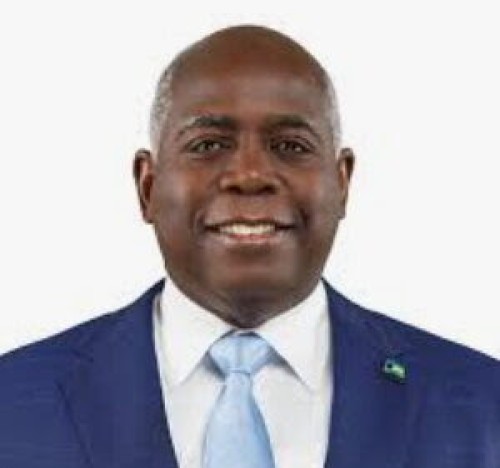 Prime Minister Phillip Davis“Inflation sat quietly in the background. Capital flowed across borders as if nothing could stop it. If you were lucky enough to be plugged into those flows, life could feel comfortable. If you were not, there was at least a feeling that the tide might eventually lift your boat too,” Davis told the opening of the Invest Fest Bahamas conference.
The event is organised by The Bahamas International Securities Exchange (BISX) and has brought together regional and international leaders, investors and innovators to shape the future of wealth in The Bahamas and in the Caribbean.
Prime Minister Davis said that with the changing global environment “interest rates have teeth again” adding “climate events can wipe out assets in a single night.
“Technology is racing ahead of our habits. Geopolitics has returned in a very raw form, with trade, sanctions and payment systems used as tools of power. For a small island nation like ours, this new reality can feel unforgiving. We are exposed to storms, to swings in tourism, to movements in oil prices, to rules and standards we did not write.”
Davis said the country cannot pretend that none of this is happening, warning however “we also must not talk ourselves into helplessness”.
He said there is a big difference between living in a tough neighbourhood and having no say over your own house.
“We do not control the global weather, but we control how strong our foundations are. We do not control every movement of international capital, but we control what it finds when it comes here.
“We do not control the pace of technology, but we control how ready our people are to use it.
That is where capital markets come in,” he said, adding that at the simplest level, a capital market is a meeting place between savings and ideas.
“It is where a nurse’s pension meets a company’s expansion plan. Where a young founder with a promising concept meets a crowd of small investors willing to take a chance. Where a government that wants to build airports and energy plants meets citizens and institutions who want a safe place to put their money.”
He said that if all those meetings happen in New York or London, “then we are passengers” adding decisions about what to build and who owns what are taken somewhere else, under someone else’s rules.
Prime Minister Davis said that if more of those meetings happen in The Bahamas “on our exchange, under our laws, with Bahamian people at the table, then we start to move from passengers to participants”.
He said Invest Fest Bahamas is described as the region’s premier financial conference, connecting investors, entrepreneurs and innovators to shape the future of wealth, with keynotes, live investment opportunities, curated networking and hands-on workshops that spotlight Bahamian capital markets, unlock access to capital, advance financial literacy and drive growth.
“Those are impressive words, but they are also a mirror of what our country needs. Because the truth is that The Bahamas is at a fork in the road.”
Prime Minister Davis said that one path leads to a future where serious financial decisions continue to be taken mostly somewhere else, where the role is to comply, to adjust, to make the best of whatever others have decided.
The other path he said leads to a future where local institutions are strong, markets are deep, people participate, and the country uses global capital to serve Bahamian goals.
But he urged the delegates to be honest as to where “we are.
“We are an island people. We know storms in our bones. We know what it is to watch the sea change colour and feel a knot in the stomach. We know what it is to board up a window, fill a bathtub, check on a neighbour. We know that hope is good, but preparation is better.”
Prime Minister Davis said that the experience should shape how the people of the country think about finance, adding “we should never again build an economy that looks sturdy in good weather but falls apart at the first sign of trouble.
“We already have some important strengths. We have a central bank that is respected across the region. We have regulators who have earned credibility. We have professionals who are trusted in major financial centres.
“We have BISX, our own exchange, which exists because earlier leaders refused to accept that every serious listing had to take place in someone else’s market. So we start from a position of experience and capacity,” Prime Minister Davis said adding the challenge is to use that base to build something even stronger, something that fits this new world.
He said the world which developing countries we are heading into is defined by three big shifts, namely climate, digital revolution and social pressure.
“If we ignore these shifts, they will push us around. If we face them squarely, they can open doors. Climate risk can become climate opportunity when capital is directed into clean energy, resilient infrastructure and the blue economy.
“Digital change can become a chance for our people to sell services to the world without leaving home, if they have the skills and the tools. Social pressure can become social progress if more people feel that they have a stake in growth through pensions, funds and shares that they understand.”
Against this backdrop, Prime Minister Davis said that resilience will be among the priroties going forward in developing the economic, saying “we know that shocks will come.
“Hurricanes, global financial scares, sudden moves in interest rates, cyber incidents. We cannot prevent all of them, but we can choose whether they knock us flat or simply knock us back a little.
“Resilience means sound banks and insurers. It means a public debt path that is believable. It means regulators who act early when they see trouble. It means clear arrangements for how we manage stress, so that ordinary people are not left in the dark.
“Our capital markets must be built on that kind of foundation. Investors, whether local or international, will bring serious money only if they believe that the system can weather a storm.”
He said another priority would be to build depth, noting that right now, while BISX does good work, the exchange does not yet reflect the full variety of the economy.
“There are sectors that never appear on the ticker. There are companies that could benefit from listing, but are unsure about the process. There are instruments that would suit our needs that are not yet offered here.
“We need more issuers across more sectors: energy, logistics, food production, digital services, culture and creative work, the blue economy.
“We need a ladder of markets: private placements and crowdfunding for the earliest stages, growth segments for mid-sized firms, the main board for large and mature companies, active markets for both equity and debt.”
Davis said that there is also need for better information, adding “you cannot invest wisely in what you cannot see.
“Regular, honest reporting from companies and from government is part of building depth,” he said, making reference to inclusion as a third priority for building the economy.
“If the capital market feels like a private club…it will always be smaller than it could be. Inclusion begins with financial literacy. People need clear explanations of what different products are, how risk and reward relate, what diversification means.
“They do not need to be told that risk disappears. They need to be shown how to manage it. Inclusion also means access,” he added.

