


Forest Fires Damaging Agricultural Lands in Guyana as Residential Properties Remain Under Threat
GEORGETOWN, Guyana - The Civil Defence Commission (CDC) says preliminary assessments of the ongoing forest fires affecting the community of Karisparu in Region Eight, indicate that damage to agricultural lands and housing materials, while several residential properties remain under threat.
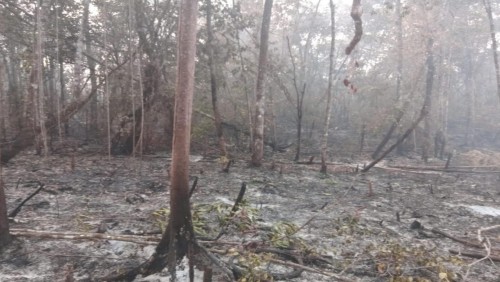 In a statement, it said that of particular concern is the potential impact on the main access bridge spanning Karisparu Creek, which connects the airstrip to the village.
The CDC, which along with the Guyana Defence Force (GDF), Guyana Fire Service (GFS), and Guyana Forestry Commission (GFC), are coordinating a response to the fires, said that initial reports indicate that the fires were deliberately set by persons burning garbage within the community, which subsequently spread beyond control.
It said that as a result, the joint response team has conducted a community sensitisation exercise with residents of Karisparu, focusing on forest fire prevention, the dangers associated with open burning, and the importance of adopting safe practices to minimise the risk of further incidents .
The CDC said that it will continue to monitor the situation closely and coordinate with the relevant agencies to facilitate an effective response.
“Citizens are strongly advised to refrain from open burning, particularly during dry conditions, and to exercise extreme caution when undertaking activities that may result in uncontrolled forest fires.”
Earlier, the Environmental Protection Agency (EPA) has advised the public of increased fire risks associated with elevated temperatures and potentially drier environmental conditions across Guyana.
It said that these conditions may be influenced by climate patterns associated with El Niño, which can contribute to above-average temperatures, reduced rainfall and drier vegetation, creating favourable conditions for the development and spread of fires.
“Prolonged periods of heat and reduced rainfall can cause vegetation to become dry and more susceptible to ignition, increasing the likelihood of fires spreading across grasslands, forests and agricultural areas,” the EPA said, noting that according to climate forecasts, El Niño conditions are expected to persist into early 2027, with gradual weakening possible during the first half of the year.
“The public is encouraged to remain vigilant, as elevated temperatures and drier conditions may continue to increase the risk of vegetation fires.
“The public is reminded that fire prevention is a shared responsibility. Everyone is encouraged to exercise caution and take the necessary steps to protect lives, property and the environment,” the EPA added.

