

Miami Carnival is Growing, But Its Caribbean Roots Remain at the Center
Miami Carnival is entering its 43rd year with an expanded 2026 program that reflects both the growth of South Florida's Caribbean community and the increasing international reach of the celebration.
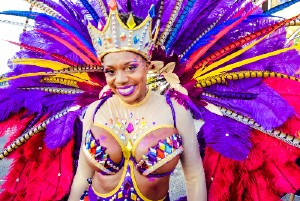 What began in 1984 as a relatively small Caribbean cultural gathering has developed into a major annual event attracting participants and visitors from across the United States, the Caribbean, Europe and beyond. Miami Carnival has described the celebration as a cultural tourism and economic driver for South Florida, with more than 100,000 attendees annually and millions of dollars generated through hospitality, dining, transportation and small-business activity.
he growth is particularly evident in this year's program. Miami Broward Carnival 2026 will unfold across two weekends from October 3 to 11, adding new programming and expanding its presence in Broward County. The schedule includes Junior Carnival and Pan Jamboree on October 3, a new Red Road Fete on October 9, J'ouvert on October 10 and the main Parade and Concert on October 11.
The expansion, however, does not represent a departure from the traditions that established Miami Carnival. Masquerade, steelpan, soca, J'ouvert and the wider traditions of Caribbean street culture remain at the heart of the program.
The event also reflects the diversity of the Caribbean itself. Miami Carnival's history began with a strong Trinidadian presence, but over the decades the organization and celebration have evolved to include communities from across the region. Historical accounts of the festival describe its transformation into a broader Caribbean organization, with representation extending from Guyana and Saint Lucia to other Caribbean communities throughout South Florida.
That evolution is particularly important in a diaspora city such as Miami, where Caribbean identity is not represented by a single nationality. Carnival provides a common cultural space where different island traditions can exist alongside one another while contributing to a larger Caribbean identity.
The 2026 program also places considerable emphasis on the future of the tradition. Junior Carnival will feature more than eight children's mas bands, while Pan Jamboree will showcase more than four steelbands. J'ouvert is expected to feature more than 20 bands, followed by more than 16 masquerade bands for Carnival Day.
Taken together, the program illustrates how Miami Carnival has expanded without abandoning the cultural practices that gave it meaning in the first place. It has become larger, more commercially significant and more geographically expansive, but its central purpose remains the celebration of Caribbean culture in South Florida.
Miami Carnival 2026 takes place October 3–11, culminating with the Parade and Concert at Central Broward Park & Broward County Stadium in Lauderhill, Florida.

