


WASHINGTON, DC - The Inter-American Development Bank (IDB) Tuesday said that Jamaica faces a long road to recovery from the onslaught of Hurricane Melissa last October that resulted in an estimated US$12.2 billion in physical and economic damage.
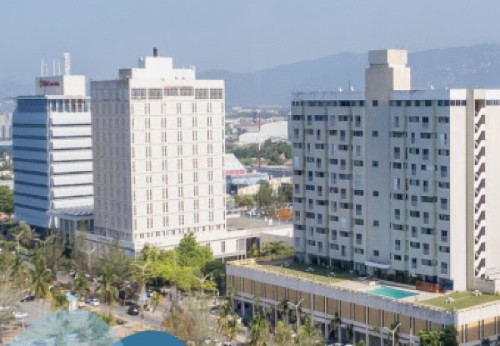 Kingston, JamaicaIn its “Fiscal Resilience, Debt Reduction and Domestic Resource Mobilization in the Caribbean,” report, the Washington-based financial institution said that going forward, the fiscal balance and debt levels immediately reflect the government’s hurricane recovery reaction, reflecting a higher-than-planned fiscal deficit and debt-to-gross domestic product (GDP) ratio.
It said that the Andrew Holness government will continue to have access to significant financing resources for reconstruction, and it remains firmly on course to achieve a debt-to-GDP ratio of 60 per cent in the medium term.
But it said that as the economy continues to recover, climate risks remain latent, highlighting the significance of continuing to introduce further resilience through insurance, financing, and fiscal buffers
According to the IDB report, Hurricane Melissa caused physical and economic damage in Jamaica estimated at US$12.2 billion, or 56.7 per cent of GDP, including major damage to housing and a significant impact on the tourism and agriculture sectors.
It said notably, the country’s ambitious fiscal targets were postponed for two years to allow for reconstruction investment and that although Hurricane Melissa has been the driving factor influencing the economy, the global context is also likely to introduce headwinds to Jamaica’s recovery
GDP growth in Jamaica has been significantly impacted by the two recent hurricanes. GDP contracted by 0.54 per cent in 2024 when Hurricane Beryl hit in July of that year and is estimated to have declined an additional 0.06 per cent in 2025 after Hurricane Melissa hit in October 2025.
The IDB said that based on the pace of recovery and disbursement of funds to the most affected areas in the aftermath of Melissa, a category 5 storm, the economy may remain depressed over the medium term.
“This is in great contrast to 2021 and 2022, when Jamaica was rebounding from the COVID-19 pandemic with growth rates of 5.7 per cent and 6.4 per cent, respectively. GDP is projected to continue contracting through 2026 by 1.15 per cent before beginning a recovery in 2027, with 3.14 per cent projected growth.”
Forecasts before the hurricane were for GDP growth of 2.1 per cent in 2025. Government GDP growth projections on a fiscal year basis are appropriately more conservative, projecting GDP growth rates of -4.5 per cent and -0.5 per cent in financial year 2025/2026 and financial year 2026/2027, respectively, before growing by 3.3 per cent in financial year 2027/2028 and 2.6 per cent in financial year 2028/2029.
The IDB said that several sectors experienced large contractions in the last quarter of 2025 when Hurricane Melissa hit. Quarterly GDP growth contracted by 7.1 per cent in that quarter, driving annual GDP to contract by 0.1 per cent for the year.
The mining and quarrying sector, which makes up one per cent of the economy, had the greatest contraction of 37.5 per cent. This was followed by hotels and restaurants, which constitute about six per cent of the economy, and which contracted 31 per cent. On an annual basis, the hardest hit sector was hotels and restaurants, which contracted by 5.4 per cent.
The Washington-based financial institution said that the higher fiscal deficit in 2026 is mainly driven by recovery and reconstruction priorities following Hurricane Melissa. While total revenues are projected to remain stable in financial year 2026/2027, increasing by one per cent relative to the previous fiscal year, expenditures are projected to increase by 14.5 per cent, driving the fiscal balance to a deficit of almost five per cent.
“Recovery and reconstruction priorities are also driving higher levels of capital expenditures, expected to increase from 1.6 per cent of GDP in financial year 2025/2026 to 2.1 per cent in financial year 2026/2026. This represents an increase of about 65 per cent, with capital expenditure reaching almost US$500 million.”
Despite these spending increases, the government remains firmly committed to maintaining fiscal discipline and maintaining its credibility. The government is maintaining its objective to reduce the debt-to-GDP ratio to 60 per cent, which was postponed to 2030 due to the hurricane.
Furthermore, credit rating agencies such as S&P Global and Fitch reaffirmed Jamaica’s credit rating at BB and BB-, which are two and three steps away from an investment-grade rating, respectively. Moody’s improved Jamaica’s rating to Ba3, three steps away from investment-grade.
Higher overall balances are driving an increase in the level of debt to GDP. The debt-to-GDP ratio was previously projected to decline to almost 50 per cent of GDP by 2030. However, the hurricane modified that trajectory, increasing the ratio from 62.4 per cent at the end of financial year 2024/2025 to 68.9 per cent at the end of financial year 2025/2026.
The postponement of the fiscal target to achieve a debt-to-GDP ratio of 60 per cent by financial year 2027/2028 was approved by Parliament. The projected target is now 60.9 by financial year 2029/2030.
The IDB report notes that Jamaica’s tourism sector is firmly recovering, led by the private sector. As of May 2026, several hotels were already in operation. Authorities have communicated that hotels are expected to fully re-open by December 2026, with that lengthy recovery period signaling the extent of the damage caused by Hurricane Melissa in October 2025.
However, sector earnings are projected to decline by only three per cent in financial year 2026/2027, while visitor arrivals are projected to decline by one per cent. Jamaica hosts approximately 2.2 million stopover visitors and more than one million cruise passengers per year.. In 2025, about 70 per cent of visitors came from the United States, 13 percent from Canada, and 10 percent from Europe.
The IDB said that the tourism industry is not expected to fully recover until 2027, and higher energy prices in 2026 could add to import costs. Goods and services export growth is projected to contract by six per cent in both 2025 and 2026 before growing back by 17 per cent in 2027.
A large share of service export growth in 2027 could be attributed to tourism. The trade balance is likely to be affected due to higher oil prices in the first half of 2026, similar to what happened in the first half of 2022. In 2022, Jamaica imported two per cent fewer barrels of oil, but the cost was more than 60 per cent higher.
Other sectors facing challenges in the aftermath of the hurricane and the global context include mining and agriculture. The mining sector contracted by 9 percent in 2025, following moderate quarterly output in the first three quarters of the year and a large contraction in the fourth quarter (-37.5 per cent).
The mining sector was reported to have been moderately affected by the hurricane. However, Jamaica’s largest export, alumina, which accounted for 42 per cent of total exports in 2024, fell by 26 per cent in 2025
In 2024, the main destinations for alumina were the Russian Federation, the Netherlands, Iceland, and Canada, suggesting that the decline in alumina exports may be unrelated to tariffs and exports to the United States.
Average alumina prices were lower in 2025 relative to 2024, which could also explain the decline. The agriculture sector was fundamentally impacted by the hurricane, but it was also potentially impacted by US tariffs.
The sector grew by 2.9 per cent in 2025 but contracted by 17.7 percent in the fourth quarter of 2025. Agriculture exports declined significantly, falling by 19 percent in 2025. For context, approximately 65 per cent of total agricultural exports went to the US market in 2024, according to the United Nations Comtrade database.

